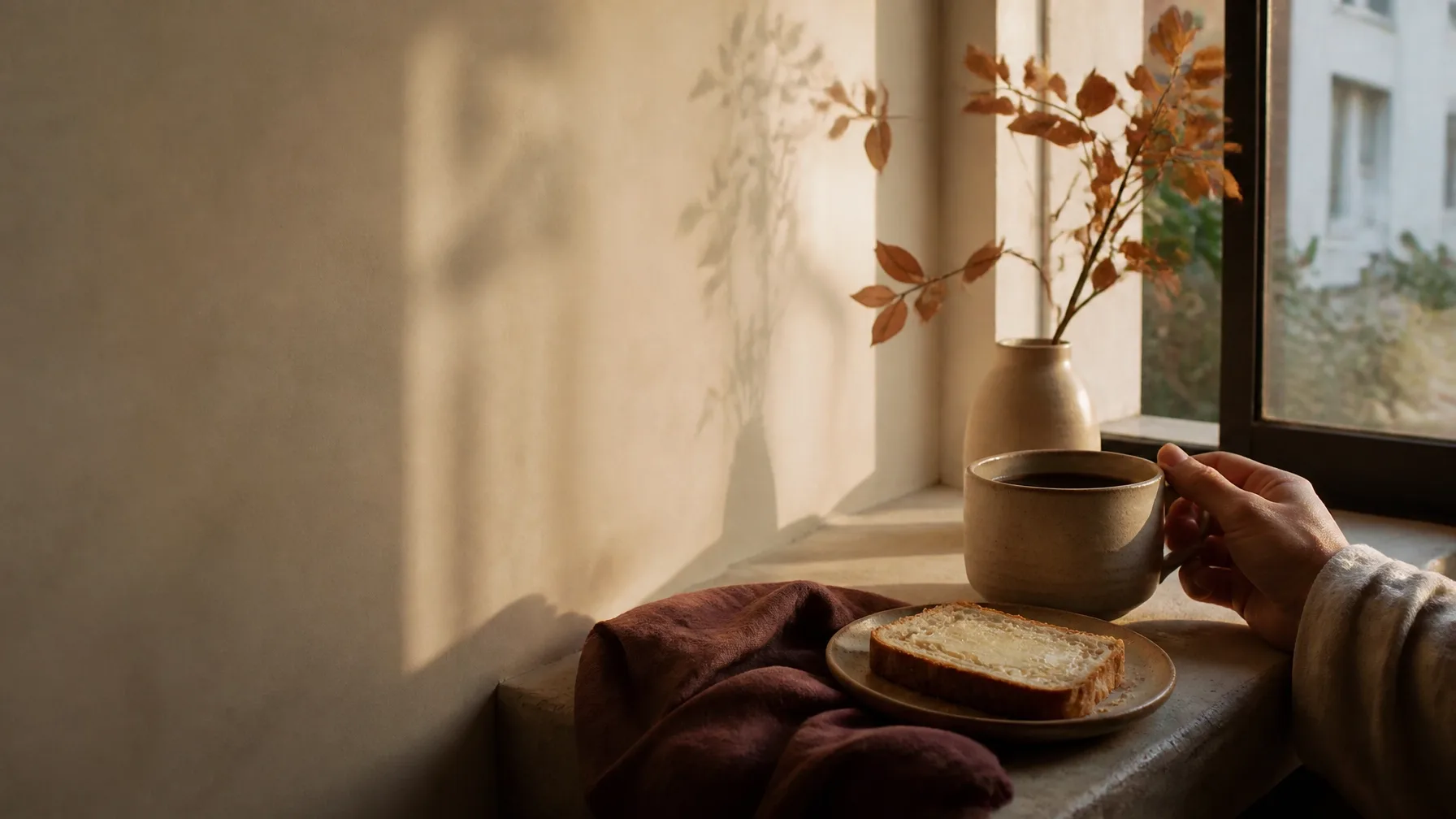
Image produced for this article and cleared for editorial use by the company.
What did Marcel Proust notice in the madeleine?
In Swann's Way, Marcel Proust describes a memory that does not arrive because someone deliberately went looking for it. The narrator dips a madeleine into tea; its taste and scent meet something that had been beyond the reach of intention. Suddenly, Combray returns not as information about childhood, but as a whole world.
It is a literary scene, not a laboratory protocol. Even so, it gives a name to a recognisable experience: a scent can open an unexpected passage to a time that seemed stored away. The Proust effect is not proof that every odour carries a hidden memory. It is a way of speaking about the particular intensity of some scent-evoked memories.
What matters most in the scene is not the madeleine as a magical object. It is the lack of control. The past does not return because the narrator opened an album or chose to think about childhood. It returns because a present sensation touches an old network of associations.

Image produced for this article and cleared for editorial use by the company.
Why does smell seem to reach memory in such a particular way?
Smell does not work apart from memory, emotion or context. When a molecule reaches olfactory receptors, the brain turns that signal into an experience: it recognises, compares, assigns value and relates it to the other things happening at the time.
Part of the explanation lies in the pattern of those connections. Olfactory processing is closely related to regions involved in emotion and memory, including structures of the limbic system. That proximity helps explain why a scent can feel emotionally charged before it can be named.
But proximity is not destiny. A scent does not skip steps or access memory like opening an intact file. Learning, attention, familiarity, culture, age and situation all shape what will be recognised — or what will remain a sensation that is difficult to explain.
Herz and Cupchik (1995) found that memories evoked by odours could have a more marked emotional quality. Chu and Downes (2000) brought together evidence that these memories tend to be vivid, personal and connected with earlier periods. The studies describe a pattern; they do not turn scent into a universal shortcut to autobiography.
A scent returns a scene, not just information
A photograph often tells us where to look. A word can point to the name of a street, a person or a year. A scent seems to work less obediently. It arrives mixed with the temperature of a room, someone’s distance, the time of day, the texture of a shirt, and the fear or calm we did not know we were recording.
That is why remembering through a scent can feel less like consulting a record and more like re-entering a scene. We do not necessarily recover everything accurately. We recover an atmosphere, a body in space, a version of ourselves from before we understood what that moment meant.
In two experiments, Chu and Downes (2002) found that memories evoked by odours had distinct emotional ratings and more detail than memories evoked by other cues, including visual ones. The qualification matters: this does not mean every scent is a secret passage, or that olfactory memories are always exact. Intensity and accuracy are not the same thing.
An autobiographical memory is reconstructed in the present. It may bring true details, rearranged details and gaps that feeling has filled. A scent does not return the past untouched. It returns a present relationship with what the past still moves in us.

Image produced for this article and cleared for editorial use by the company.
The invisible architecture of everyday life
Scents also organise life before we notice. Coffee announcing morning, sunscreen changing our distance from summer, an apartment corridor, stored clothing, rain arriving on asphalt: every setting has a sensory architecture. It does not appear on a floor plan, but it participates in the experience of living there.
That architecture is shared and personal at once. The smell of bread can mean care to one person and haste to another. The same perfume can recall a party or a goodbye. There is no universal dictionary of autobiographical scents because biography is not universal.
Perhaps this is why olfactory memory reveals so much about everyday life. It holds not only major events, but the conditions around them: the air in a kitchen, the wood in a room, a street after rain, the soap in a home where someone was still present.
The past leans on humble things. A memory did not have to feel important when it was lived in order to become important later. Sometimes what remains is precisely what received no explanation: a cup, a window, a path walked many times.
What does a scent reveal about who we are?
It reveals that identity lives not only in the stories we consciously tell. It is also formed through associations, habits, places, losses, encounters and sensations that the body learned before words were available for them.
That does not mean a scent defines us. A memory can be intense without being a complete truth about a person. Nostalgia can bring us closer, but it can also edit. The past that returns is always a past encountered from some present.
Perhaps the Proust effect matters because it reminds us of this delicacy. Some things we know because we can explain them, and some things we recognise before we can say why. Life is not made only of available information; it is also made of the ways the world settles into us.
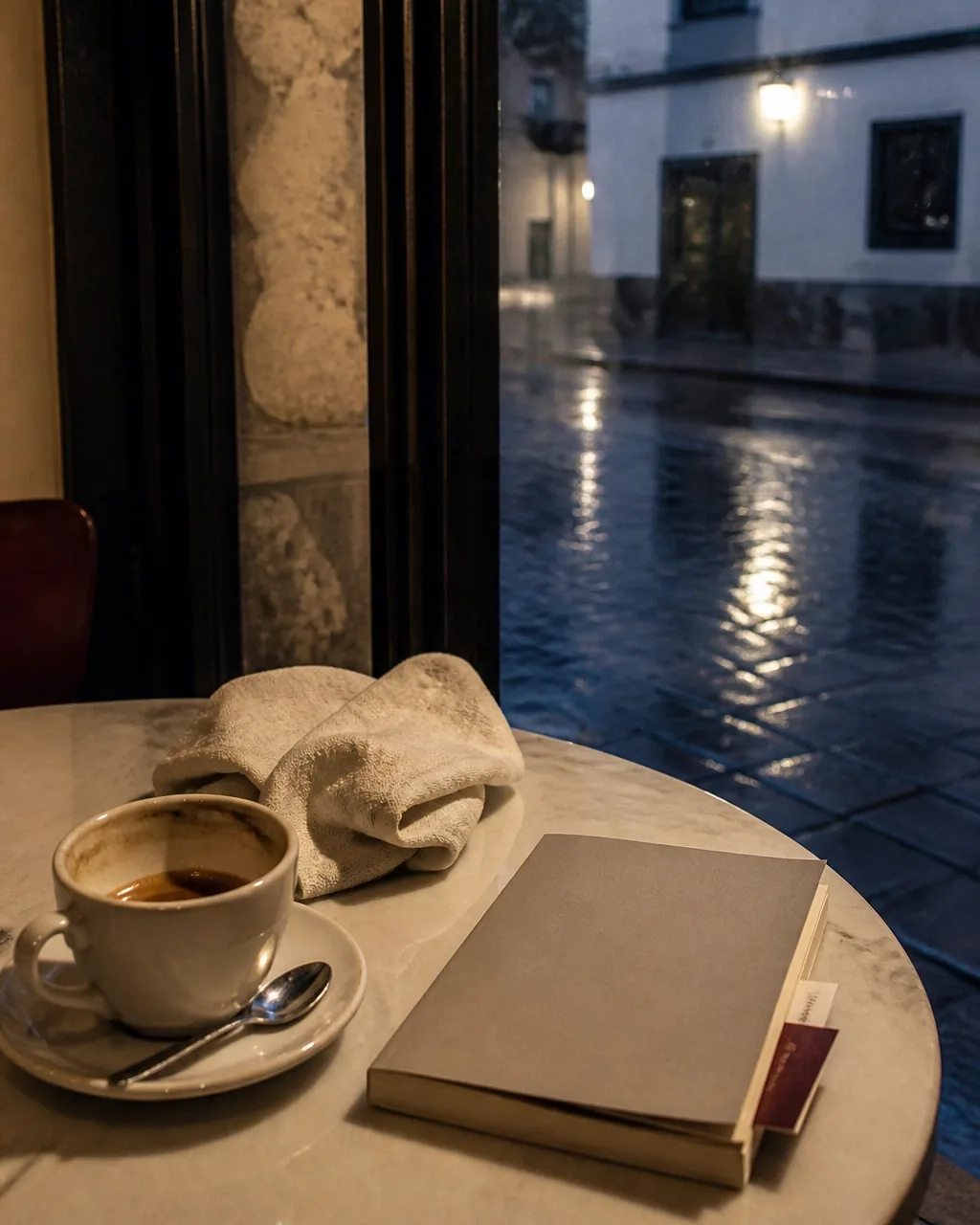
Image produced for this article and cleared for editorial use by the company.
A scent can take us back in time, but not to remove us from the present. It returns as an invitation: to look more carefully at the scene happening now, at the small conditions that may one day become part of someone’s memory. Coffee, bread, rain and light do not need to promise eternity. They only need to be truly there.
Sources and further reading
- Herz & Cupchik (1995), “The Emotional Distinctiveness of Odor-evoked Memories” — Chemical Senses 20(5):517–528
- Chu & Downes (2000), “Odour-evoked Autobiographical Memories: Psychological Investigations of Proustian Phenomena” — Chemical Senses 25(1):111–116
- Chu & Downes (2002), “Proust nose best: Odors are better cues of autobiographical memory” — Memory & Cognition 30(4):511–518
- Proust, M. (1913), Swann's Way — Project Gutenberg, ebook 2650
- DIARY · About Victor Lemos
STAY GOLDEN, STAY SENSIBLE.
Victor Lemos — Journalist, Author and Medical Student
Press: Rachel (+1 239 778 0445) · www.victorlemos.cc · @victorlemos.cc
Threads: threads.victorlemos.cc · Instagram: instagram.victorlemos.cc