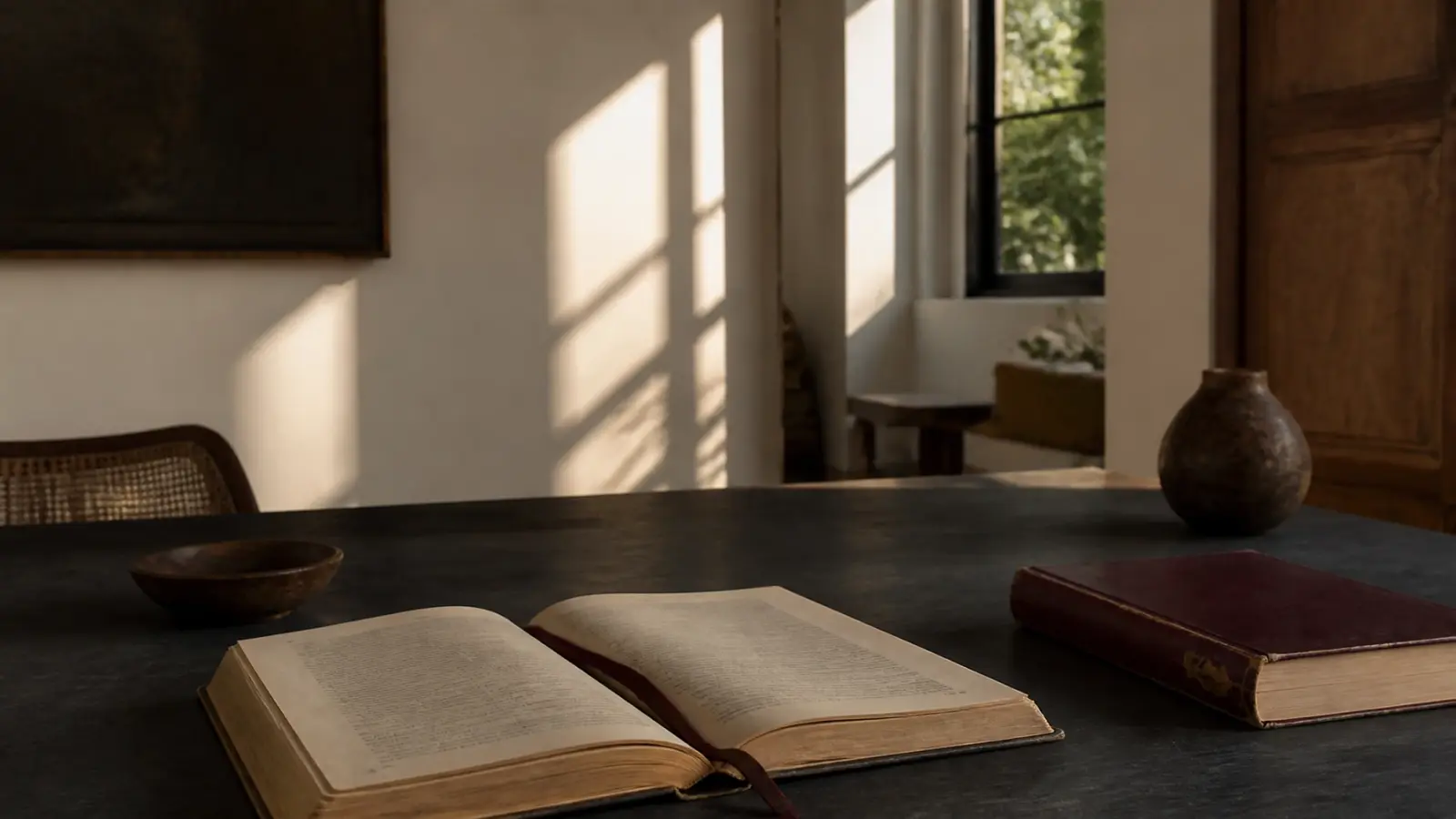
Some books are finished and left on the shelf. Others keep happening after the last page, like a conversation that has not yet found its final sentence. Returning to them is not simply repeating a reading. It is discovering what changed in the interval — in the book, in the world, and especially in the person holding it.
A first reading finds the story; rereading finds time
A new book arrives with the delicacy of an unfamiliar city. We do not yet know which streets matter, which names will return, or what kind of silence announces a change. We read for orientation. Attention spreads out to build a map: characters, voices, images, rhythms, and promises.
During a rereading, some of that work has already been done. The story is no longer only a sequence of events; it is also a familiar landscape. We can notice a door that once looked decorative, a sentence that seemed incidental, the exact moment when a character begins to disappear from themselves.
The pleasure does not come only from knowing what happens. It comes from seeing how the event was prepared. Surprise becomes smaller, but the book becomes denser.
What changes when the book stays the same?
The question seems contradictory. If the words remain in the same order, why should the experience be different? Because reading is not receiving an untouched object. It is creating a relationship between a text and attention situated in time.
On a first reading, we may be moving through a change, a love affair, grief, study, or simply a particular afternoon. Years later, the same paragraph meets another body, other concerns, and a larger emotional vocabulary. The book did not need to age in order to become different.
That is why rereading can be a quiet form of autobiography. We do not meet only the novel or essay. We meet the person who read it before: what they underlined, ignored, wanted to understand, or did not yet have the language to name.
Memory is not an intact archive
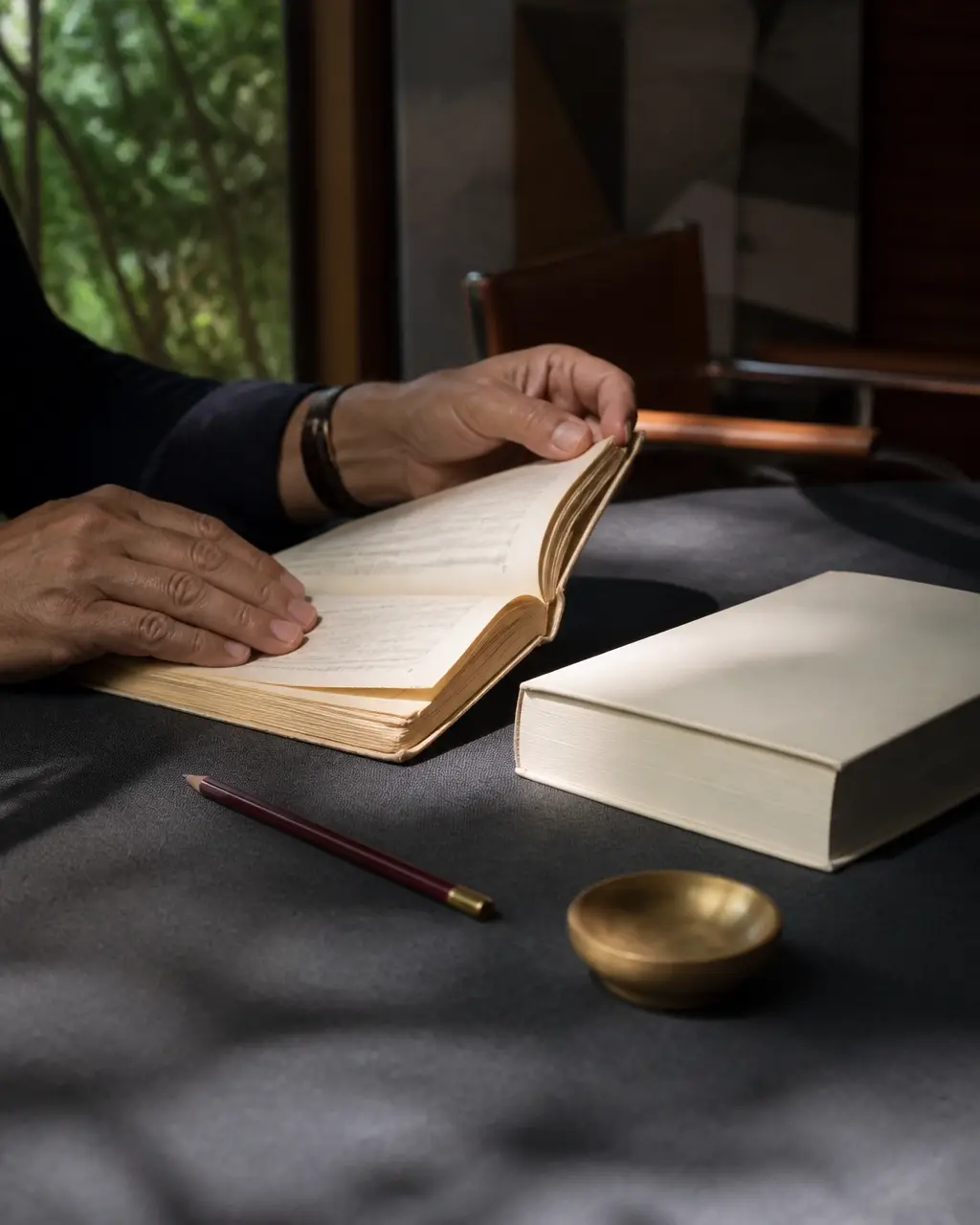
We do not remember a reading as if we were opening a perfectly preserved folder. Memory reconstructs. It keeps scenes, sentences, sensations, and relationships, but it does not necessarily provide a faithful copy of what happened. Sometimes rereading corrects a memory. At other times, it confirms an impression that distance made us doubt.
Nostalgia takes part in this movement. It is not only a wish to return to the past; it can be a way of looking for continuity and meaning between different versions of ourselves. Research by Sedikides and Wildschut describes nostalgia as an experience that can connect past and present, without turning it into an invariably beneficial force or a recipe for well-being.
An old book may return a street, a house, a friendship, or an era. But it can also show that the longing is not exactly inside the book. It belongs to the person we were when the book found us.
Attention changes too
On a first pass, attention is often driven by the urgency to move forward. We want to know. On the second, we can slow down. The book no longer needs to prove that it deserves to be finished; it can simply offer company.
This does not mean every rereading is deeper. Some books age badly for us, and that is information too. Others lose their hold when the questions that sustained them stop being ours. Rereading is not a duty of loyalty to a work or to an old taste.
A 2013 study by Kidd and Castano made the relationship between literary fiction and theory of mind central to a wider conversation about reading and perspective. Its result mattered, but it does not justify saying that any book permanently transforms a person, or that literature automatically produces empathy. Rereading can enlarge a question; it does not need to deliver a measurable effect to be worth our time.
Recognition is a form of pleasure
There is a particular joy in finding a sentence we already know. Recognition is not a lesser surprise. It is the feeling that a form survived the interval and can still reach us.
Some passages become almost musical because the body remembers them before the mind formulates them. A chapter’s rhythm, the return of an image, a change in voice: these things create intimacy. The text stops being merely somewhere we visit and becomes a place where we know how to remain.
But intimacy does not remove strangeness. It can make resistance more visible. A sentence that once seemed transparent may now feel cruel. A character we admired may reveal a limitation. The book becomes more familiar and less obedient.

The book as object, not only content
Rereading also involves the object. The opened spine, the folded page, the coffee mark, the note written in a hurry. Books carry a small archaeology of attention. Even when we do not remember the day, we recognize the angle of our handwriting.
A new volume has none of that history yet. It offers possibility. A reread book offers possibility and traces. There is a difference between opening pages with no past and opening pages that have already witnessed an earlier version of us.
This does not make the old superior to the new. Reading something for the first time keeps the force of discovery, the feeling that a language is being invented in front of our eyes. A shelf needs both: the book that arrives without memory and the book that returns carrying its own.
Rereading is not going back; it is meeting again
Returning does not place us in the same location. The city changed, the house changed, the body changed. Even an apparently identical sentence is surrounded by other experiences. Rereading may be less a trip to the past than a meeting between the past preserved in the text and the present that reads it.
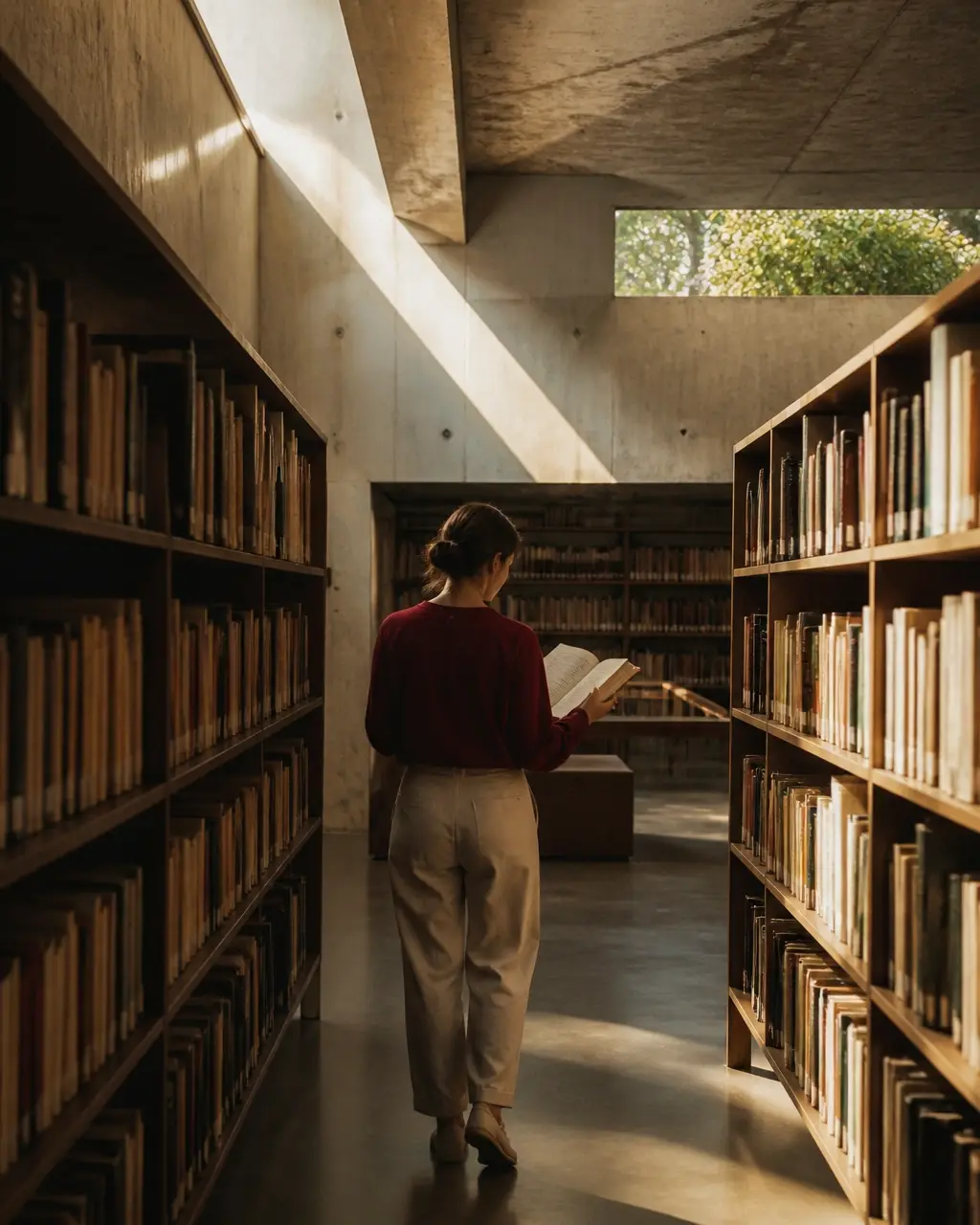
We do not need to reread the right books, in the right order, with the right intellectual justification. We can abandon a volume halfway through, return to one page, or discover that the work no longer serves us. Reading time does not need to defend itself through productivity.
Rereading is a way of letting time participate in interpretation. The work offers its permanence; we offer the difference. Between them, a question appears that no book can answer alone: what in us has learned to read another way?
Sources and further reading
- Kidd, D. C. & Castano, E. (2013). “Reading literary fiction improves theory of mind”. Science, 342(6156), 377–380 — DOI 10.1126/science.1239918
- Sedikides, C. & Wildschut, T. (2018). “Finding meaning in nostalgia”. Review of General Psychology, 22(1) — DOI 10.1037/gpr0000109
- Proust, M. (1905). “Sur la lecture” / “On Reading”, an essay related to John Ruskin’s Sesame and Lilies — Internet Archive
STAY GOLDEN, STAY SENSIBLE.
Victor Lemos — Journalist, Author and Medical Student
Press: Rachel (+1 239 778 0445) · www.victorlemos.cc · @victorlemos.cc
Threads: threads.victorlemos.cc · Instagram: instagram.victorlemos.cc